
Cleaning Bathroom with Bleach: 8 Proven Methods That Actually Work

Here's the thing: bleach is what you need to restore freshness and eliminate all that grime. Cleaning bathroom with bleach removes bad odor and makes the bathroom environment tolerable again. In my years of helping homeowners with cleaning challenges, I've discovered that bleach provides three key benefits to your washroom. Take Sarah from Portland - after trying countless products, she finally achieved that spotless bathroom she wanted using the methods I'll share below.
But wait… did you know that your kitchen sponge could be dirtier than the average toilet seat? A recent study reveals this shocking truth.
➜ RELATED: Need to Find the Best Vacuum Cleaner? Now You Can Get the One!
A. 3 Sure Benefits of Cleaning the Bathroom with Bleach
When you use it correctly, bleach guarantees these benefits:
1. Disinfects Effectively
Unlike ordinary cleaners, bleach eliminates even viruses like norovirus - giving your family real protection.
2. Eliminates Bad Odors at the Source
Due to humid bathroom conditions, harmful bacteria find it easier to breed in your space. Bleach kills these odor-causing bacteria, mildew, and mold completely. It then replaces that bad smell with its natural odor which actually repels bugs.
3. Brightens and Whitens Your Surfaces
Remember when your bathroom had that shiny, appealing look? Over time it loses that attractive appearance, but you can use bleach to restore the brand-new look of surfaces like your porcelain sink. This will dramatically boost your bathroom's appearance before visitors arrive - check the photo below:

In addition to being hygienic, a clean sink enhances the aesthetics of your bathroom
Although bleach is readily available at home or in shops, many people hesitate to use it properly. All you need to do is learn the correct techniques, and that's exactly what this guide will teach you. But before you rush to pick up that cleaning agent, you must understand these crucial precautions.
B. Precautions When Using Bleach
For the best results and your safety, keep these guidelines in mind:
1. Always Mix Bleach in Well-Ventilated Areas
When diluting concentrated bleach, perform this operation in a well-ventilated space. Ideally, do your mixing in open air. If you must work in your bathroom, open the doors, windows and switch on the exhaust fan. This protects you from becoming dizzy or experiencing breathing problems.
➜ RELATED: Lemon Juice for Cleaning: 16 Ways to Use Lemons to Clean Your House
2. Wear Protective Clothing (No Exceptions)
Put on protective gear to shield your skin, eyes, and nose from bleach effects. You must wear:
A. Rubber gloves (protect your hands)
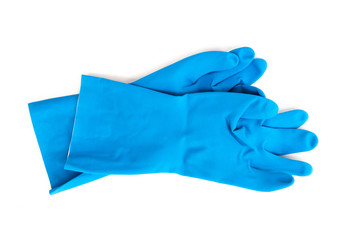
Your hands will be shielded from bleach with these gloves
B. Face masks (prevent inhalation)

You can avoid breathing in bleachy vapors by donning a respiratory mask, like the woman above
C. Long pants (avoid skin contact)

Methods for Bathroom Cleaning
3. Keep Children and Pets Away from Your Work Area
While mixing and cleaning, ensure you keep children and pets far from your workspace. They can easily interfere with your job and face serious safety risks.
4. Never Drain Bleach into Pipes
After cleaning, you might feel tempted to pour remaining chemicals into pipes or septic systems. This will definitely damage your pipes and disrupt your septic system's smooth operation.
5. Never Mix Bleach with Other Chemicals
You might own various cleaning detergents, but you or your family should never mix bleach with other products since this creates dangerous situations. For example, mixing bleach with ammonia produces toxic gas that can seriously harm you.
6. Don't Mix Hot Water with Bleach
When preparing diluted bleach, always use cold water. When you dilute the chemical with hot water, it emits more dangerous fumes that can overwhelm you quickly.
7. Use Diluted Bleach Within 24 Hours
After diluting bleach for cleaning, don't let it sit longer than 24 hours. When you let it sit for extended periods, it decomposes and loses its effectiveness. At the same time, keep undiluted chemicals in cool, shaded areas away from direct sunlight.
C. Do You Know the Dirtiest Part of Your Bathroom?
Your washroom harbors countless germs from walls, toilet, floor, and even curtains. A recent study reveals that your bathroom floor actually has the highest number of germs. This contradicts the popular belief that your toilet seat or bathtub is the dirtiest area. According to a BBC report, your kitchen sponge could be 200,000 times dirtier than your toilet seat!
➜ RELATED: How to Clean Tile Floors With Vinegar, Baking Soda, and Lemon?
Hard to believe, isn't it?
You should, therefore, learn the best way of how to clean the bathroom with bleach. With that said here are eight ways or parts that you should clean with the bleach:
D. Top 8 Places to Bleach in Your Bathroom
- Bathmat
- Bathtub
- Eliminating molds and mildew
- Countertops and sinks
- Toilet bowl
- Sterilizing bath toys
- Disinfecting trash cans
- Shower curtains
E. Step-by-Step Cleaning of a Bathroom with Bleach
Now that you know where to focus your efforts, let's dive into the specific techniques for each area. These methods will help you tackle every corner of your bathroom safely and effectively.
1. Shower Curtains
Before you begin cleaning your shower with bleach, take down the curtain and liner first. Cleaning them doesn't have to be difficult since you can accomplish this with a simple machine wash.

A shower curtain that has to be cleaned
- Put all curtains and liners in your washing machine
- To prevent curtains from wrinkling during the wash, add a few towels to the same load
- Add your usual laundry detergent
- Measure half a cup of bleach and pour it into the washing machine
- Run the complete cycle
- Remove curtains and liner, then air dry them
2. Bathroom Mat [rubber]
Over time, oily substances from soap and mildew develop on your bathmat. If you don't clean it regularly, it harbors germs and produces unpleasant smells. Besides, stepping in or out of an oily bathmat can easily cause slipping accidents.

Even babies find the tub less slippery when there is an anti-slip bathmat in place
Here's what you need and how to eliminate this problem completely.
What you need:
- Measuring cup or tablespoon
- 1 to 2 gallons of water
- Cleaning brush
- Deep sink
- Washing machine (optional)
Steps
- For ordinary cleaning bathroom with bleach, mix one teaspoon of bleach to every gallon of water. For deep cleaning, mix one cup of bleach to five gallons of water. Then transfer your resulting mixture into the deep sink.
- For quick cleaning, soak your bath mat in the solution for about ten minutes. This helps loosen those deep-seated stains that have built up over time.
- For heavy cleaning (removing mildew and mold), soak your bathmat for about four hours to ensure complete penetration.
- Next, take your cleaning brush and scrub the mat thoroughly to remove all dirt and debris.
- After several rounds of scrubbing, remove the mat from your sink or bathtub.
- Spread your bathmat to dry in sunlight - never use a dryer as heat can damage the material.
- Rinse your sink to remove scum and other accumulated dirt from the cleaning process.
Tip: If removing the rubber mat from your bathtub proves difficult, either add baby oil to lubricate it or use a credit card to scoop it out.
➜ RELATED: Best Dirt Devil Vacuum Reviews And Buying Guide
Cleaning the mat through machine wash
Alternatively, you can clean it in your washing machine - here's how:
- Place your rubber mat in the washing machine.
- Add other bleach-safe items like white towels to protect against potential damage.
- Add half a cup of bleach to your wash cycle.
- Set your machine to run on gentle cycle using either warm or cold water.
- When finished, remove the mat and hang it on your clothesline to dry.
3. Bathtub
Does your bathtub look embarrassingly stained? You need bleach's cleaning action! My client Jennifer tried this method last month and was amazed when her 10-year-old tub looked brand new again.
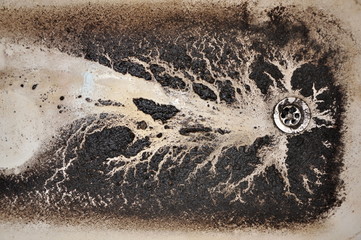
In addition to being repulsive, a dirty bathtub embarrasses the household. Avoid becoming a victim!
To restore your tub's appearance and sanitize it properly, bleach can provide serious help for your cleaning efforts.
Here's what you need to complete this cleaning process successfully:
- Two sizable sponges
- Dry towel
- Baking soda (one part)
- Measuring cup
➜ RELATED: Baking Soda for Cleaning - The Accessible and Effective Household Cleaner
If you lack time to read through all steps, here's a visual instruction that takes only about a minute of your time:
Steps
- Here's a proven way to clean your regular tub with bleach.
- Empty your tub completely. Remove everything like soaps, conditioner, lotions, and other items from the tub. Keep them in a safe place where they won't be damaged.
- Wet a sponge with hot water. Turn on hot water and let it saturate the sponge for several seconds. Then use this sponge to wipe your tub's entire surface. This helps loosen soap scum in preparation for the bleaching process.
- Dilute your bleach by combining half a cup of bleach with one gallon of water to create your cleaning solution. Soak your sponge in this bleach solution. Then use the sponge to wet your bathtub surface once more. Wait five minutes for the solution to weaken stains on your bathtub surface.
- Rinse with cold water using another sponge wetted with cold water. Use this sponge to wipe your tub by gently rubbing the surface in circular motions.
- Dry your tub completely by picking up a dry towel and wiping the entire surface until it's completely dry.
- Still see stubborn stains? Don't worry! Here's your solution:
- Make a paste to eliminate those extra stubborn stains. Prepare a paste using one part baking soda to one part bleach. Apply this paste onto stubborn stains, then wait about 15 minutes for it to work.
- Next, sprinkle water on the paste, then use a damp loofah to remove the paste. Let your hands follow circular motions for best results.
Finally, dry everything with a towel.
Look at your bathtub now! Does it sparkle brilliantly?
Here's an alternative method for deeply stained tubs
- Empty all objects from your tub, then clean it the usual way first.
- Turn on your water and let it run until it reaches the hottest possible temperature. Ensure your entire tub fills up (but doesn't overflow) with steaming water.
Hint: If your water doesn't get very hot (about 60°C), boil water in a separate container and add it to your tub.
- Depending on your tub's capacity, add the correct amount of bleach to the hot water. Use the ratio of half a cup of bleach to one gallon of water.
- Allow this solution to soak for about 15 minutes. This gives bleach enough time to work on those deep-seated stains.
- After the required time passes, drain out all water completely.
- By now, your tub should be sparkling clean. If not, mix one part bleach with one part water in a spray bottle. Then spray this solution directly onto stained spots.
- Finally, rinse your entire tub with hot water. Give it a thorough rinse to remove all traces of bleach.
The process of cleaning your tub with bleach is easy to follow. Having learned how to clean your bathtub with bleach, you don't have to wait until grime accumulates badly. Act before it's too late!
Now that your bathtub is spotless, let's see how to deal with your toilet.
4. Toilet
For many people, cleaning a toilet feels like an unpleasant task. As unfriendly as it may seem, you should clean and sanitize your toilet weekly. Cleaning your toilet with bleach accomplishes both tasks simultaneously.
It's not safe to clean some bidets with bleach. Before you start this task, consult your manufacturer to confirm if bleach cleaning is safe for your specific model.
If you don't clean your toilet regularly, it's going to look like the one below:
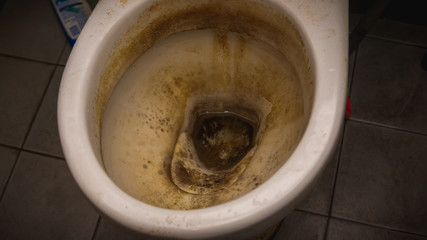
When you have bleach in your home, why let your toilet look like this?
Surely, you don't want your toilet to reach that disgusting state. That's why I want to help you.
First, here's what you'll need when cleaning your toilet with bleach:
- Bleach
- Toilet brush
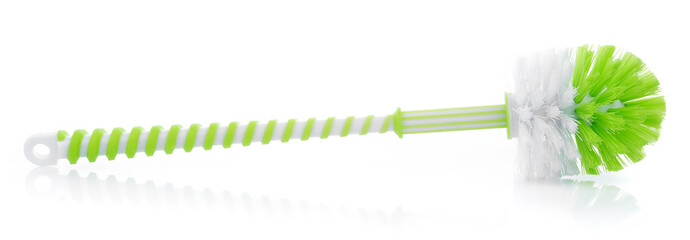
This makes it simple to access the rim's bottom
- General-purpose cleaner
- A sponge
Removing Rust Residue
Before applying bleach, check if your toilet is rusty. If it is, don't add bleach until you remove the corrosion completely. Otherwise, the rust will only harden and become worse.
- Measure half a cup of baking soda and apply it to rusty parts. Then sprinkle a little vinegar on the same spot.
- Allow this setup to rest for half an hour.
- Rinse by flushing out the baking soda and vinegar completely.
This should remove the rust effectively.
Cleaning With Bleach
A. Preparing and sanitizing your toilet's interior
- Measure half a cup of bleach, remove the lid and pour it gently into your toilet bowl. Wipe up any traces of liquid that spill on your floor.
- Take your toilet brush and scrub your toilet's interior. Make sure you clean under the rim, around the waterline and even down the chute thoroughly.

Cleaning the inside of the toilet
- Position your brush under the rim so that clean water can flow through it when you flush.
- Flush your toilet to rinse the brush as well. Shake your brush a little and put it back in its holder.
It's good to start thorough cleaning on a clean surface. Your toilet is now ready for deep cleaning.
B. Cleaning built-up or stubborn stains
Bleach can effectively eliminate stubborn stains from your toilet, but it must be applied and left to work for several hours.
So discuss with your family or roommates to pick the best time for this cleaning project.
Here are the steps for cleaning up built-up or stubborn stains:
- Measure ¼ cup of bleach.
- Carefully lift the lid and pour the bleach gently into the bowl, then return the lid to its position. Close the door and prevent everyone from using the bathroom.
- Let it rest for about ten hours. You can either let it stay overnight or throughout the day.
- After your preset time, open the bathroom door, flush the toilet and lift the lid to check the improvement.
- If you still see traces of stains on your toilet, repeat this procedure. Only this time, let it rest for a longer period than before.
➜ RELATED: How to Clean With Vinegar - Amazing Remedies and Cleaning Hacks for Homeowners
C. Sanitizing the exterior
- Begin by preparing the right concentration to use. Measure five tablespoons of bleach and combine it with a gallon of water. Mix thoroughly.
- To prepare a smaller amount, use the ratio of 1¼ tablespoons of bleach to 950 ml of water.
- Transfer your solution into a spray container.
Did you know that urine contains ammonium salts which shouldn't combine with bleach?
Before spraying your bleach solution, use a mild cleanser to remove urine traces from your toilet completely.
Pay attention to these areas:
- Rim
- Both top and bottom of the seat
- Outer bowl
- Lid: front and back
- Stand
Having cleared urine traces, spray your entire toilet's surface with the bleach solution you prepared earlier.
If you're in a hurry to use the toilet, leave the solution for about a minute, then wipe dry with a clean towel.
Otherwise, for complete sanitization, allow the liquid to dry on your toilet's surface naturally.
I hope your toilet now looks pristine and fresh!
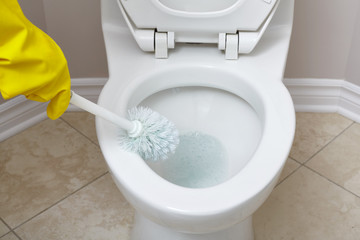
How your toilet should appear after using diluted bleach to scrub and clean it
5. Mold and Mildew on Tiles
However thoroughly you clean your bathroom mat, it won't look attractive if there's mold or mildew on your floor or grout. Have you ever wondered what those black stains on your shower floor actually are?
In most cases, mold becomes rampant during cold seasons when humidity levels increase.
If you don't have time to read through these instructions, here's a quick video clip demonstration showing how to handle it:
You don't have to worry - here's how to clean your shower with bleach and remove mold completely:
What you need:
- Bleach
- Water
- Spray container
- Coarse brush or toothbrush
Steps
- Combine one part bleach with two parts water, then mix thoroughly.
- Transfer your mixture into the spray bottle and secure the cap.
- Spray on affected parts and non-porous surfaces.
Have a look at the photo below:

Cleaning tiles of mold and mildew improves their appearance
Or even better with this example:
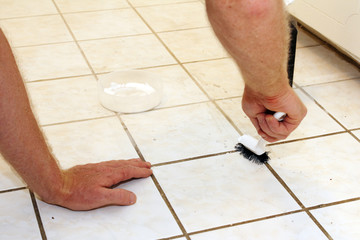
Grout can be readily cleared to seem bright with a tiny brush moistened with weak bleach
If you don't have a spray container, you can use a rag to apply the solution to mold-affected areas.
- Allow it to rest for about 10 minutes.
- After this waiting period, take your coarse brush and scrub the areas thoroughly.
- For tiny holes or tight spaces, use a toothbrush for detailed cleaning.
- Rinse all surfaces and you're done with the cleaning process.
➜ RELATED: Best Hoover Vacuum Cleaners for Different Cleaning Needs
6. Countertops and Sinks
First, begin by cleaning any mess from your sink and countertops.
Next, plug your sink and run hot water into it until it's about halfway full. Measure half a cup of bleach and add it to your sink. Fill it completely with hot water.
Allow your bleach solution to sit in the sink for a few minutes until it returns to room temperature. This provides enough time for odors and bacterial infections to break down.
After putting on your dish gloves, remove the plug and let the water drain out. Fill your sink again with clean cold water and drain again. This removes any traces of bleach that might be lingering on your sink's surface.
Scrub lightly with a sponge or green scouring pad. Just make sure you use scouring materials that are friendly to your sink's surface.
To clean water or soap spots on your sink, pat dry with a dishtowel.
➜ RELATED: How to Shine Laminate Floors: The Best Practical Way
7. Sterilizing Bath Toys
Bath toys provide excellent breeding grounds for bacteria. However, sterilizing them isn't difficult when you know the right approach. When it comes to cleaning bathroom with bleach, this step ensures your children's bath time remains safe and hygienic.

It is also necessary to sterilize bath toys
Below are the steps to sterilize your bath toys:
- Collect all your bath toys into a bin or tub.
- Measure ¾ cups of bleach and add it to your bin or tub.
- Add a gallon of water to the same container.
- Let them stay in the solution overnight.
- The next morning, rinse thoroughly with warm water.
- Air-dry all toys completely.
8. Trash Cans

Germs can also be found in trash cans. Apply mild bleach on them
Here are simple steps for thoroughly cleaning your trash can:
- Add one tablespoon of bleach to a gallon of water.
- Pour this mixture into a spray bottle.
- Spray both the interior and exterior of your cans with the solution.
- Allow them to sit for around 15 minutes.
- Then wipe dry with a soft cloth.
Your Path to a Sparkling Clean and Healthy Bathroom
There are many things you need to clean in your bathroom regularly. You don't have to get tired of cleaning bathroom with bleach because it sanitizes and refreshes your entire environment effectively. When you master the right way to clean your bathroom with bleach, your bathroom environment will always remain sparkling and smell-free.
From curtains to toilet bowls, from mildew and mold on grout to every surface in between, bleach proves itself as an effective cleaner. All you have to do is dilute it in the right ratios and use it before it decomposes.
But don't forget to wear your protective clothing every time!
So, what have we left out in our list of bathroom items? Why not share your best tips on how to clean with bleach in the comments below? We'd love to hear from you!
FREQUENTLY ASKED QUESTIONS
- 01. How Often Should I Clean My Bathroom With Bleach?
-
Clean your toilet weekly with bleach, and deep-clean other areas like bathtub and tiles monthly. For high-use bathrooms, you may need to clean more frequently.
- 02. Is It Safe to Mix Different Cleaning Products With Bleach?
-
Never mix bleach with other cleaning products, especially ammonia-based cleaners. This creates toxic gas that can seriously harm you. Always use bleach alone.
- 03. What's the Correct Ratio for Diluting Bleach for Bathroom Cleaning?
-
For most surfaces, mix ½ cup bleach with 1 gallon of water. For lighter cleaning, use 1 teaspoon bleach per gallon of water. Always use cold water, never hot.


